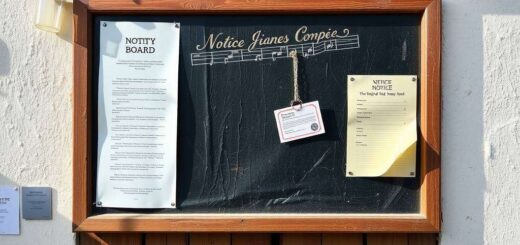
How Fire Rated Notice Boards Improve Compliance in Commercial Buildings
Introduction
In commercial environments, compliance with fire safety regulations is not merely a legal obligation but a critical component of protecting lives and property. One often underappreciated tool in achieving robust compliance is the fire rated notice board. These boards, also known as fire proof bulletin boards or fire rated noticeboards, are designed to withstand fire exposure while displaying essential safety information. They play a pivotal role in ensuring that occupants, staff, and visitors can quickly locate and understand evacuation routes, fire marshals’ duties, and other statutory requirements.
Why fire rated notice boards matter
In many jurisdictions, workplaces must provide clear, accessible information about fire procedures, emergency contacts, and equipment locations. The integrity of these messages is paramount; if information is damaged or inaccessible during a fire, the response can be delayed, increasing risk. Fire rated notice boards mitigate this risk by:
- Preserving information integrity during a fire event
- Withstanding high temperatures and smoke exposure
- Providing durable, tamper-evident solutions for critical notices
By deploying fire proof bulletin boards and fire retardant display boards throughout a building, managers create a resilient information ecosystem that supports timely and informed decision-making during emergencies.
Key features of fire rated notice boards
High-quality fire rated notice boards combine several attributes to ensure compliance and usability:
- Fire resistance: Constructed with materials that resist structural collapse or rapid degradation under defined fire conditions, helping preserve notices long enough for occupants to respond.
- Visual clarity: High-contrast text, legible fonts, and clear iconography aid quick comprehension, especially in stressful situations.
- Tamper resistance: Lockable models, such as fire rated lockable notice boards, deter unauthorised alterations to critical instructions or contact details.
- Compliance branding: Some boards are designed to meet specific standards or codes, aligning with local fire safety regulations and building codes.
- Accessibility: Inclusive design considerations, including mounting height and glare-free surfaces, ensure information is accessible to all occupants, including those with visual impairments.
Types of fire rated boards and their applications
There are several varieties suited to different spaces and regulatory requirements:
- Fire proof bulletin boards: Ideal for communal areas, corridors, and entrances where general fire safety information, policies, and evacuation maps are posted.
- Fire rated display boards: Used for more formal or high-traffic zones such as reception areas, security posts, or operational floors, where notices must endure extended exposure to ambient conditions and potential tampering.
- Fire retardant notice boards: Employed in areas where notices require frequent updates but must retain integrity against heat and minor impacts.
- Flame retardant notice boards: Suitable for environments with elevated heat risk or industrial settings where equipment generates heat or sparks.
- Fire rated lockable notice boards: Critical in locations handling sensitive information, such as emergency plans, staff rosters for fire marshals, or confidential procedures.
Selecting the right combination of boards depends on risk assessment outcomes, occupancy types, and the fire strategy of the building.
Enhancing compliance through placement and content
The effectiveness of fire rated notice boards hinges on both where they are placed and what they display:
- Strategic placement: Position boards near exits, stairwells, and fire control rooms where occupants are most likely to need guidance quickly. In multi-tenant buildings, consider shared corridors and lift lobbies to maximise visibility.
- Up-to-date content: Regularly review and refresh notices to reflect current emergency procedures, fire wardens, evacuation routes, and contact numbers. A proactive maintenance schedule reduces the risk of outdated information, a common cause of non-compliance findings.
- Standardised templates: Use consistent formats for headings, maps, and instructions. Standardisation streamlines training, reduces cognitive load during emergencies, and supports audit readiness.
- Language and inclusivity: Ensure notices are available in languages used by occupants and accessible formats for people with disabilities. Clear pictograms and universal symbols complement textual information.
- Audit trails: Maintain records of updates, approvals, and installation dates. This demonstrates due diligence during compliance audits and inspections.
Fire rated notice boards provide durable, compliant communication spaces for emergencies and safety instructions in public and workplace environments. Designed to withstand heat and fire exposure, they help meet safety regulations while preserving readable notices. For more options, visit the dedicated page: www.displaydevelopments.co.uk.
The role of fire rated notice boards in risk management
Beyond regulatory compliance, these boards contribute to broader risk management strategies:
- Reducing information loss: Fire rated notice boards resist damage that could obscure critical information, ensuring continued access to guidance during and after a fire event.
- Supporting staff training: Boards act as ongoing teaching tools, reinforcing evacuation procedures and roles of fire marshals between formal drills.
- Facilitating accountability: Lockable fire rated display boards deter unauthorised changes to important notices, maintaining the integrity of the building’s fire plan.
- Assisting emergency planning: Well-displayed assembly point maps, stairwell procedures, and emergency contact lists enable faster, more organised responses.
Integration with other fire safety systems
Fire rated notice boards perform best when integrated into a comprehensive fire safety framework:
- Link to the fire risk assessment: Align board content with findings, including specific evacuation routes and area-specific instructions.
- Coordination with signage: Complement compliance with other fire safety signage, ensuring consistency in visuals and terminology.
- Electronic equivalents: In sophisticated environments, combine physical fire retardant notice boards with digital dashboards that update remotely, ensuring rapid dissemination of changes while preserving physical copies for accessibility during power outages.
Maintenance and lifecycle considerations
Because these boards are central to safety communications, ongoing maintenance is essential:
- Inspection schedules: Regularly inspect for damage, ensure clear visibility, and verify that locks function correctly on fire rated lockable notice boards.
- Material wear: Monitor for warping, fading, or corrosion that could compromise readability or structural integrity.
- Update cadence: Establish a routine for content refresh aligned with regulatory changes, organisational structure shifts, and incident learnings.
- Replacement planning: Plan for lifecycle replacement to avoid gaps in compliance due to aging materials.
Best practices for procurement
When sourcing fire rated notice boards, organisations should:
- Verify ratings and standards: Ensure products meet relevant fire resistance ratings and regional standards.
- Assess durability: Choose materials with proven performance under heat, smoke, and mechanical impact.
- Consider maintainability: Opt for surfaces that are easy to clean and resistant to vandalism, with secure fastenings.
- Evaluate security features: For sensitive content, prioritise fire rated lockable notice boards to prevent tampering.
- Seek modular options: Flexible configurations enable tailored layouts for different floorplates and occupancy patterns.
Conclusion
While often undervalued, fire rated notice boards are a fundamental component of a compliant and resilient fire safety strategy in commercial buildings. By combining fire proof bulletin boards, flame retardant notice boards, and fire rated lockable notice boards in thoughtfully designed placements, building managers can improve information accessibility, deter tampering, and support timely, informed responses during emergencies. In short, high-quality fire rated display boards are not just passive fixtures; they are active enablers of compliance, safety culture, and operational continuity.