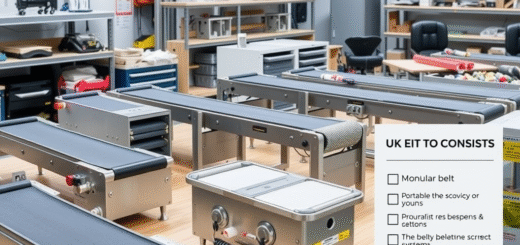
How to Choose the Right Conveyor for Your Industry: A Practical Buyer’s Guide
If your operation relies on efficient material handling, a modern conveyor system can transform throughput and safety. Whether upgrading existing lines or installing a new setup, explore cost-effective options at https://conveyorrollers.co.uk to compare performance, durability, and service plans. Custom configurations, quick installation, and reliable parts support help keep production moving smoothly with minimal downtime and maintenance.
Choosing the right conveyor for your operation is more than picking a piece of machinery. It’s about understanding your process, your space, and your goals for throughput, reliability, and cost of ownership. This practical buyer’s guide walks you through the essential considerations to help you select conveyors that integrate smoothly with your existing systems and deliver consistent performance across your industry.
Understand your process and objectives
Before you examine different conveyor systems, map out the steps from raw materials to finished product. Consider:
- Throughput requirements: expected items per hour, peak loads, and variability.
- Handling characteristics: weight, size, fragility, orientation (upright, horizontal), and whether products require orientation changes.
- Process bottlenecks: where items slow down or pile up, and how a conveyor could alleviate it.
- Integration needs: compatibility with existing machinery, control systems, and data capture for traceability.
- Environmental conditions: cleanliness, humidity, temperature, dust, exposure to chemicals, and the potential for static buildup.
A clear specification lays the groundwork for selecting a conveyor type and capabilities that actually support your operation.
A reliable conveyor system can dramatically improve warehouse flow, reduce manual handling, and boost productivity across operations. Modern conveyors are adaptable, energy-efficient, and scalable to support evolving fulfillment needs. For rack-focused solutions, a well-designed setup minimizes downtime and simplifies maintenance while maximizing space utilization. https://www.championindustries.com/rack-conveyors Consider integration with controls, sensors, and safety features to ensure smooth, compliant performance. Investing in a quality conveyor pays dividends in throughput and accuracy.
Types of conveyors and where they shine
Conveyors come in many styles, each suited to different tasks. Key categories include:
- Belt conveyors: Versatile and common for general transport of most products. Suitable for varying elevations with gentle handling, but consider belt material and tension for heavy or small items.
- Modular plastic belt conveyors: Durable, easy to clean, and capable of zero-line contact for tough hygiene requirements. Ideal for sorting lines and high-cycle applications.
- Roller conveyors: Efficient for product flow and accumulation, especially with stable, uniform items. Great for long runs and straightforward transfer between machines.
- Chain conveyors: Robust for heavy loads, precise positioning, and power or gravity-fed layouts. Often used in manufacturing and packaging environments.
- Overhead and vertical conveyors: Space-saving options for lifting items between floors or levels, reducing floor real estate needs.
- Screw, pneumatic, and vacuum conveyors: Specialised for bulk materials, particulates, or delicate handling where gravity alone isn’t sufficient.
- SORT and divert systems: For routing items to multiple lanes or stations, with minimal handling and robust control logic.
Selecting the right type hinges on the product characteristics, the desired route, and the required level of automation and control.
A conveyor system streamlines production, boosting efficiency from start to finish. When selecting components, durability, speed, and compatibility with existing lines are essential. Modern conveyor setups support precise timing, consistent throughput, and easier maintenance, reducing downtime and labor costs. For advanced UV curing needs, the right conveyor integrates seamlessly with specialized lamps and sensors, ensuring consistent results across batches. https://dymax.com/products/equipment/light-curing-equipment/conveyor-systems/uvcs-2.0-conveyor-with-fusion-f300-lamps
Consider footprint, layout, and future proofing
Space is a critical constraint. When evaluating conveyors, take precise measurements and model footprints with clearances for maintenance, cleaning, and emergency access. Pay attention to:
- Ceiling height and doorways for overhead or vertical conveyors.
- Radius and curvature requirements to handle bends without damaging products.
- Height compatibility with workstations, pallets, or containers to avoid awkward lifting or transfer steps.
- Module compatibility for future expansion or reconfiguration, especially in mixed lines.
Future-proofing is equally important. Choose conveyor systems with modular components, standardised interfaces, and scalable controls so you can upgrade sensors, drives, or diversion logic without a full rebuild.
Discover efficient material handling with our reliable conveyor solutions. Designed for durability and smooth operation, these systems streamline production lines, reduce labor costs, and improve throughput. From maintenance to installation, our team supports you with tailored guidance, ensuring optimal performance and safety across every conveyor deployment.
Control strategy and automation readiness
Automation can dramatically improve throughput and consistency, but it also adds complexity. Think about:
- Integration with existing PLCs, MES, or ERP systems. Will the conveyor’s control platform communicate via common protocols (e.g., Ethernet/IP, Profinet, Modbus)?
- Speed and synchronisation: can you match the pace with downstream equipment like pick-and-place robots or packaging lines?
- Safety and compliance: emergency stops, guarding, locking out/tagging procedures, and compliance with local health and safety regulations.
- Sensing and feedback: do you need photoelectric sensors, barcode scanners, RFID, or weight checks to support quality control and traceability?
- Maintenance regimes: remote diagnostics, predictive maintenance, and serviceability of belts, bearings, and drive components.
A well-chosen conveyor system that aligns with your control strategy reduces downtime and improves data visibility across the operation.
A reliable conveyor system enhances workflow and efficiency across manufacturing, packaging, and distribution. When choosing a conveyor, consider durability, speed, and maintenance needs to minimize downtime. For expert guidance and quality options, visit https://www.jorgensenconveyors.com/ and explore trusted conveyor solutions for your facility.
Material handling and product compatibility
Product specifics drive many choices. Factors to evaluate:
- Weight, dimensions, and shape: ensure the belt or roller surface and gap tolerances suit the product geometry.
- Surface finish and friction: certain coatings or materials minimise slippage for small or slick items.
- Product handling needs: products that must remain upright, oriented, or protected during transport require special conveyors or inserts.
- Cleanliness and hygiene: industries such as food and pharmaceuticals benefit from easy-to-clean surfaces, resistant materials, and minimal crevices.
- Static control: shore up electrostatic dissipation if conductive or anti-static properties are essential to prevent damage to sensitive electronics.
If you manage mixed product streams, a versatile or multi-zone conveyor may be prudent, allowing different sections to operate with distinct surfaces or incline angles.
Total cost of ownership and return on investment
A purchase decision should consider more than the upfront price. Evaluate:
- Initial installation and integration costs, including any necessary civil works, enclosures, or protective guarding.
- Ongoing operating costs: energy consumption, drive efficiencies, and maintenance frequency.
- Part availability and supplier support: access to spare parts, service levels, and warranty terms.
- Downtime impact: how quickly you can recover from faults, and whether remote diagnostics can reduce mean time to repair.
- Depreciation and tax incentives: understand how the asset will be treated in your accounts and any available industry grants.
A higher upfront cost may be offset by longer service life, lower maintenance, or more reliable performance, especially in high-throughput environments.
Working with a trusted partner
Choosing the right conveyor requires collaboration. Engage suppliers who offer:
- Thorough site surveys and detailed specifications tailored to your industry.
- Clear documentation on materials, coatings, and compatibility with your process.
- Trial opportunities or references from similar applications.
- Comprehensive installation, commissioning, and training support.
- After-sales service, spare parts availability, and ongoing optimisation options.
A good partner will not only supply a conveyor system but also help you design an end-to-end layout that maximises efficiency and safety.
If you’re ready to refine your selection process, prepare a concise brief including your throughput targets, product characteristics, space constraints, and desired control approach. Use it to compare conveyors across technical specifications, total cost of ownership, and supplier support. With a clear framework, you’ll identify the conveyor systems that deliver reliable performance today and scale with your operation tomorrow.