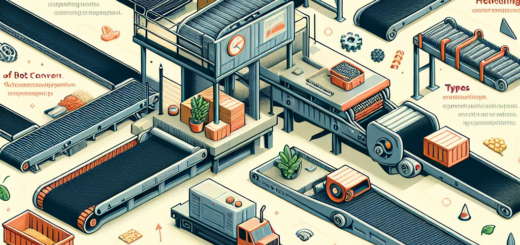
Understanding Conveyors: Essential Types and Applications for Your Industry
In today’s fast-paced industrial environment, the efficiency of transporting materials and products can make or break a company’s operational success. Conveyor systems have emerged as indispensable tools that not only optimise workflow but also minimise the risk of errors in handling and processing materials. Understanding the various types of conveyors and their specific applications is crucial for any business looking to enhance its productivity.
The Basics of Conveyor Systems
At their core, conveyor systems are engineered for the continuous movement of goods and materials within a facility. These systems can be found in a multitude of settings, from manufacturing floors and warehousing operations to distribution centres and retail environments. The choice of a conveyor type largely depends on several factors, including the nature of the materials being transported, the layout of the workspace, and the specific processing requirements.
Types of Conveyors
Conveyor systems can be categorised into several types, each designed for specific functions and environments. Below are some of the most utilised conveyor types across various industries.
Belt Conveyors
One of the most common types, belt conveyors, utilise a continuous belt to transport materials from one point to another. They are versatile and can handle a wide range of products, from bulk materials like gravel and sand to packaged goods. Belt conveyors are particularly beneficial in handling heavy or abrasive materials due to their robust construction.
FAQ: Conveyors
What are conveyors?
Conveyors are mechanical devices that transport materials or products from one location to another within a facility. They are commonly used in various industries, including manufacturing, warehousing, and logistics, to streamline processes and improve efficiency.
What types of conveyors are available?
There are several types of conveyors available, including:
- Belt Conveyors: Use a continuous belt to transport materials.
- Roller Conveyors: Utilise rollers placed in frames to allow products to roll through.
- Chain Conveyors: Employ chains for moving heavy loads over long distances.
- Screw Conveyors: Use a spiral screw mechanism for transporting bulk materials.
- Pneumatic Conveyors: Utilise air pressure or vacuum systems for moving lightweight materials.
How do I choose the right conveyor for my application?
To choose the right conveyor, consider factors such as:
- The type and weight of the material being transported
- The distance the material needs to travel
- The desired speed of operation
- Space availability within your facility
- Environmental conditions (e.g., temperature, humidity)
- Budget constraints and operational costs
Are conveyors customisable?
Yes! Many manufacturers offer customisable options for conveyors based on specific requirements such as size, capacity, speed, and features like automated controls or safety guards.
How do I maintain my conveyor system?
Regular maintenance is crucial to ensure optimal performance of your conveyor system. Here are some maintenance tips:
- Conduct routine inspections for wear and tear.
- Clean belts regularly to prevent buildup.
- Lubricate moving parts where necessary.
- Check alignment and tensioning on belts or chains.
- Replace any damaged components promptly.
What industries commonly use conveyors?
Conveyors are widely used across various industries such as:
- Manufacturing
- Food processing
- Pharmaceuticals
- Warehousing & logistics
- Automotive assembly
This versatility makes them an essential component in many production lines.
Can conveyors be automated?
Absolutely! Many modern conveyor systems can be integrated with automation technologies such as sensors, actuators, and control software which enhance efficiency by reducing labour costs and increasing throughput.
How do I utilise space effectively with a conveyor system?
To maximise space utilisation with a conveyor system, consider using vertical or inclined conveying solutions that save floor space while allowing efficient transport between different levels or areas of your facility.
Where can I buy reliable conveyors?
You can purchase reliable conveyors from specialised manufacturers or suppliers who focus on industrial equipment. It’s advisable to research their reputation through customer reviews and case studies before making a decision.
Feel free to reach out if you have any more questions about our range of conveyor systems!
Roller Conveyors
As the name implies, roller conveyors use a series of rollers to move products along a conveyor track. These systems are particularly effective for transporting items that are sturdy and can withstand the weight without deforming. Roller conveyors are used extensively in warehousing and distribution centres, where they facilitate the smooth movement of goods to and from storage areas.
Chain Conveyors
Chain conveyors employ a chain to move items along a track. This type of conveyor is especially suitable for heavy loads and is commonly used in automotive and manufacturing industries. The durability of chain conveyors allows them to handle rough, heavy, and bulky items that other conveyor types may struggle with.
Screw Conveyors
Screw conveyors are a type of mechanical conveyor that utilise a helical screw to move materials. These systems are typically employed for bulk materials, such as grain or powdered substances, and are advantageous for transporting materials vertically or at an incline.
Wire Mesh Belt Conveyors
Wire mesh belt conveyors offer a unique solution for transporting hot or delicately handled items, such as food products or metal parts. The open mesh design supports effective drainage and airflow, making them ideal for cooling or drying applications.
Conveyors are essential in modern industry, facilitating the efficient movement of materials and products across various production lines. Their design can vary significantly based on the specific application, allowing for the transport of items ranging from small components to heavy machinery. With advancements in technology, today’s conveyors are becoming smarter and more adaptable, increasing productivity. Businesses looking to enhance their operations should explore various options available in the market, including customizable solutions. For more information, visit conveyors.
Magnetic Conveyors
Magnetic conveyors leverage magnetic forces to hold ferrous materials in place while moving them along the conveyor belt. This system is particularly beneficial for transporting metal objects, as it reduces the risk of slippage and ensures more precise handling.
Common Applications Across Industries
Conveyor systems are highly adaptable and can be tailored to suit the needs of various industries. Below are several sectors where conveyor systems are indispensable.
Manufacturing
In manufacturing, conveyor systems streamline the flow of materials between different stages of production. They facilitate the movement of raw materials to assembly lines, as well as the transfer of finished goods to packaging areas. The use of conveyor systems enhances productivity and reduces the risk of human error in material handling.
Conveyors play a crucial role in modern industries, streamlining the movement of materials and enhancing efficiency in production lines. These systems are designed to transport various items, reducing manual labor and increasing productivity. With advancements in technology, conveyors have become more sophisticated, accommodating diverse applications across sectors. If you’re looking to understand more about the intricacies that come with utilizing conveyor systems, check out this comprehensive discussion: https://forum.keenswh.com/threads/how-do-you-research-unlock-conveyor-tubes.7403879/.
Warehousing and Logistics
In warehousing, conveyor systems automate the movement of goods, ensuring timely sorting and distribution. Roller and belt conveyors are particularly effective in this environment, allowing for quick loading and unloading of pallets and individual items. This automation significantly reduces the labour required for manual handling.
Food and Beverage
In the food and beverage industry, conveyor systems must meet strict hygiene standards. Specialist belt and wire mesh conveyors are often employed to transport products through cooking, cooling, and packaging processes. These systems are designed to withstand harsh cleaning chemicals while ensuring minimal contamination risk.
Conveyors are essential systems in various industries, facilitating the smooth movement of goods and materials. They enhance efficiency by minimizing manual handling and reducing labor costs. From manufacturing to warehouses, conveyors come in different types to suit specific needs, including belt, roller, and chain conveyors. For comprehensive solutions and high-quality components, you can explore further at https://conveyorrollers.co.uk, where innovation meets reliability in conveyor technology.
Automotive
The automotive industry relies heavily on conveyor systems for assembly line processes. Chain conveyors are commonly used to carry heavy parts like engines and frame sections, ensuring that components are moved efficiently from one assembly station to the next.
Mining and Quarrying
In mining and quarrying, conveyor systems are crucial for transporting bulk materials over long distances. Belt conveyors designed for heavy-duty use are particularly useful in these industries, as they can handle large volumes of material with minimal degradation.
Selecting the Right Conveyor System
The selection of an appropriate conveyor system involves several considerations. Businesses should assess the specific characteristics of the materials being transported, including weight, size, and fragility. Additionally, understanding the operational environment and any regulatory safety or hygiene standards is essential.
Choosing the right conveyor not only enhances efficiency but can also greatly reduce the overall operational costs. By investing in a tailored conveyor solution, your business can streamline material handling, minimise downtime, and improve overall productivity. Therefore, understanding the array of conveyor systems available is a vital step towards optimising your operations.